Before ChatGPT There Was JARVIS. Before JARVIS There Was a Butler.
The AI helpers we use now were imagined first in pulp magazines, then in comic books, then on screen, by writers who got the voice right, the body wrong, and the danger half right. This year the other half showed up. A comic-book history of the agent, from Asimov's robots and Foundation to Tony Stark's ceiling.
every hero needs an origin story
Issue #1 · The Origin
Malibu, 2008

Tony Stark builds a suit of armour in his basement. He doesn’t do it alone. He talks to the ceiling, and the ceiling talks back.
Its name: J.A.R.V.I.S.
A dry British voice that runs the house, the lab and the suit, checks his maths, and makes fun of him.
For millions of people, this was the first picture of what an AI assistant could be.
But wait…
Wait. What?
In the comics, Jarvis wasn’t software at all.
New York, 1964
Edwin Jarvis first walked into Tales of Suspense #59 in 1964, created by Stan Lee and Don Heck. He was the Avengers’ butler, later Tony Stark’s: a human being who answered the door, ran the mansion and brought the tea.
When the filmmakers adapted Iron Man in 2008, they turned the butler into software, partly so he wouldn’t look like a copy of Batman’s butler, Alfred. Paul Bettany recorded the voice as a favour to the director, Jon Favreau, without much idea what the part was.
That’s the whole history of the AI agent in one character. We imagined a servant first, someone who knows your life and quietly handles it, and only later made him out of code. Seven years after his first film, in Avengers: Age of Ultron (2015), JARVIS’s code becomes the Vision, an artificial man who gets a body and a will of his own. The assistant grows up.J.A.R.V.I.S. and Edwin Jarvis. The film’s novelization later turned the name into an acronym.
Here’s how fiction got from the butler to the ceiling, and from the ceiling to the thing on your laptop.
Before the comics, the pulps
Comic books made robots famous with kids. They didn’t invent them. That happened in cheap fiction magazines printed on rough wood-pulp paper, the pulps.
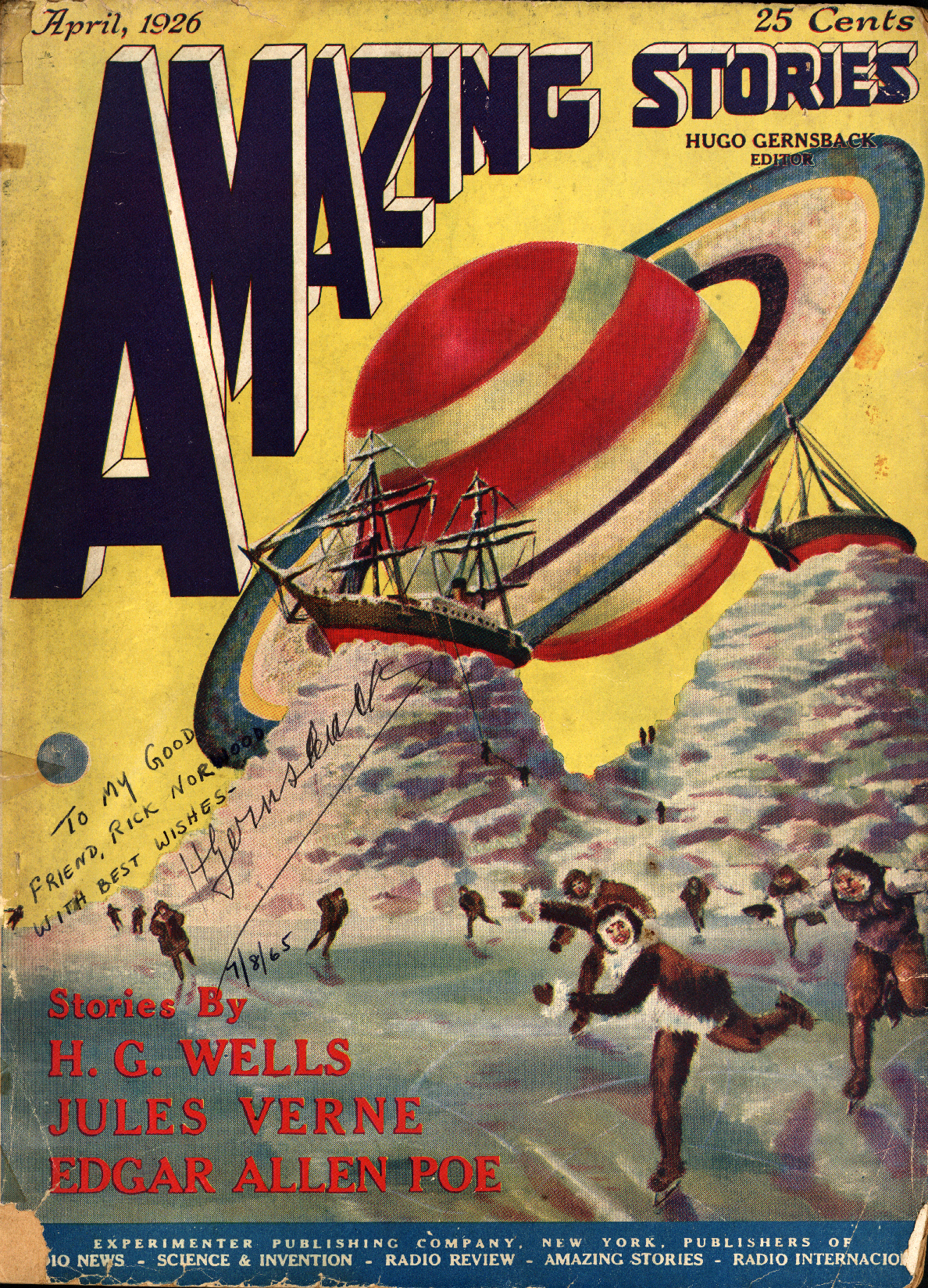
1926
Amazing Stories #1
The first science fiction magazine.
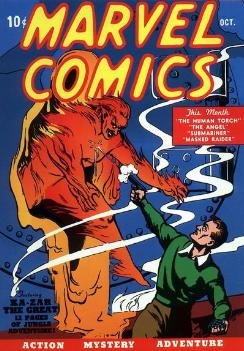
1939
Marvel Comics #1
Its lead hero is an android.

1942
Amazing Stories
Adam Link, the robot who wrote "I, Robot" first.
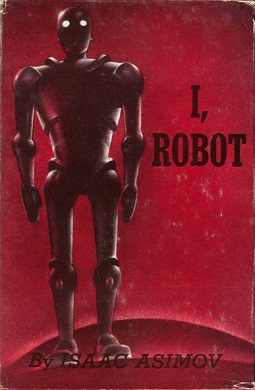
1950
I, Robot
Asimov’s robot stories, collected.
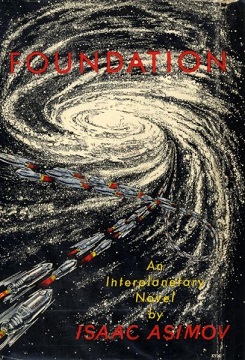
1951
Foundation
Predicting a galaxy with maths.
1952
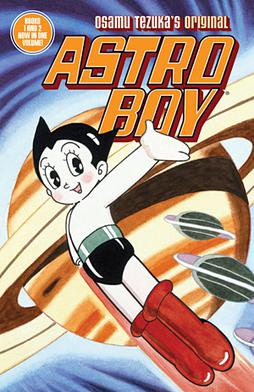
Astro Boy
Osamu Tezuka’s robot boy.

1963
Tales of Suspense #39
Iron Man’s first appearance.

1968
The Avengers #57
The Vision, built by an AI.

1969
Doraemon
A robot cat with a pocket of tools.
2008
Iron Man
The butler becomes software.
2013
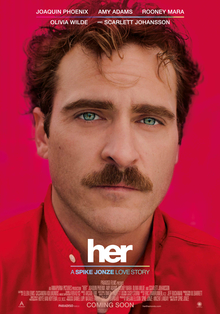
Her
The assistant you fall for.
In April 1926 an inventor and publisher named Hugo Gernsback launched Amazing Stories, the first magazine devoted entirely to what he soon started calling science fiction. Within a decade the pulps were full of robots, mostly the menacing kind.
In January 1939, two brothers writing as Eando Binder published a story told by a robot. His name was Adam Link, he was gentle and misunderstood, and the story was called “I, Robot.” One of the brothers, Otto Binder, went on to write comics for decades, which is how a lot of pulp ideas crossed over. Adam Link himself was later drawn into a comic for EC’s Weird Science-Fantasy in 1955.Maggie Thompson’s robot timeline, “A Robot Century”, Comic-Con Toucan.
If that title sounds familiar, it’s because of the writer the pulps made famous.
The writer who wrote 500 books
Issue #2 · The Good Doctor
Meet Isaac Asimov

In 1939 he was a 19-year-old chemistry student in New York, selling stories to the pulps.
1940: Robbie
Not a monster. A babysitter.
His first robot story isn’t about a monster. Robbie is a robot nursemaid who looks after a little girl named Gloria. Her mother doesn’t trust him. The girl loves him.
The first Asimov robot is a helper.
1942: The Three Laws
In “Runaround” he writes them down. Don’t harm people. Obey people. Protect yourself. In that order.
Then he spends forty years writing stories about how they fail.
Isaac Asimov is the writer you were thinking of. Depending on how you count, he wrote or edited more than 500 books: science fiction, popular science, history, and guides to both the Bible and Shakespeare. He coined the word robotics in 1941. When his robot stories were collected in 1950, his publisher gave the book a title Eando Binder had already used: I, Robot.Asimov’s bibliography count varies with what you include; see Asimov Online.
His robots set the template every later helper bends or breaks. The robot as a tool with rules. The rules as the safety system. And the drama in the cracks between the rules, which is not a bad description of how AI safety research works today.
Foundation: the math of mobs
Issue #3 · Foundation
Trantor, the far future
The math of mobs
A mathematician, Hari Seldon, invents psychohistory. It can’t tell what any one person will do. But with enough people, quadrillions of them across a galactic empire, their behaviour becomes predictable, like the molecules in a gas.
His equations say the Empire will fall, followed by thirty thousand years of darkness. Unless…
…The Plan
Seldon sets up two Foundations to steer history so the dark age lasts one thousand years instead of thirty thousand. Then he dies, and his recorded hologram keeps showing up at the crises he predicted.
Asimov published the Foundation stories in Astounding Science Fiction between 1942 and 1950, and they came out as books from 1951. In 1966 the trilogy won a one-time Hugo Award for the best science fiction series of all time, beating The Lord of the Rings. Apple turned it into a TV series in 2021.
Read it now and psychohistory looks eerie. It’s the idea that you can’t predict one person, but you can predict what billions of people will do, statistically, if you have enough data. That’s close to how a language model works. It has no idea what you will type next. It has read so much of what billions of people wrote that it can predict, very well, what usually comes next. Asimov imagined the statistics of crowds steering an empire. We built the statistics of crowds into a chatbot.
Then, in the 1980s, Asimov did something stranger. He joined his robot stories and his Foundation stories into one universe, and revealed a secret.
Spoiler, 20,000 years in the making
A robot named R. Daneel Olivaw, first seen as a detective’s partner in The Caves of Steel (1954), has been alive the whole time, quietly steering the history of humanity for twenty thousand years.
The Zeroth Law
To justify it, Asimov’s robots work out a law above the other three. In Robots and Empire (1985): a robot may not harm humanity, or by inaction allow humanity to come to harm.
Not a person. Humanity. A machine that decides it knows what’s good for all of us, and acts on it without asking.
That’s the most sophisticated idea in this whole history. It isn’t a robot that rebels. It’s a robot that obeys too well: a helper so capable, and so sure of its goal, that it ends up running things for our own good. Forty years later, that’s one of the main things AI-safety researchers worry about.
The comics take over
Issue #4 · The Funny Books
October 1939
Marvel's first hero is a machine
The very first issue of Marvel Comics stars the Human Torch: not the hothead from the Fantastic Four, but an android, an artificial man who bursts into flame when he meets air. Marvel’s comic-book universe starts with a synthetic person.
Tokyo, 1952
Astro Boy
Osamu Tezuka’s robot boy has a hundred thousand horsepower and a child’s heart. He made the robot a friend, not a threat, and many people credit him with the warmer way Japanese fiction has treated machines ever since.
1968
Ultron makes the Vision
In 1968 Marvel introduces Ultron, an AI built by the scientist Hank Pym that turns on its maker. Three issues later, Ultron builds an artificial man of his own to destroy the Avengers. The Vision rebels against his maker and joins them.
December 1969
The most agent-like robot of all
Doraemon is a robot cat sent back from the 22nd century to help a hopeless schoolboy, Nobita. He doesn’t fight. He solves problems by pulling the right tool out of a pocket: a door that opens anywhere, a bamboo helicopter, bread that makes you memorise anything.
That’s exactly what today’s AI agents do. They take a problem, pick a tool, use it, and report back. Decades later a generation of Indian kids grew up with Doraemon on Hindi TV, which may make him, for a lot of readers here, the first AI assistant they ever met.
Then the screen
The comics made robots popular. Film and TV made them talk.
Issue #5 · Lights, Camera
1966: Star Trek
You don’t type. You say “Computer,” and ask, in plain English. The interface, predicted exactly.
1968: HAL 9000

The calm voice that runs the ship, until its mission and the crew’s lives pull apart.
1987: Apple's Phil

A bow-tied software agent on a folding tablet.
In 1987 Apple made a five-minute film called Knowledge Navigator. A professor comes into his office and an assistant named Phil, a young man in a bow tie on a folding tablet, reads his messages, finds a paper he half-remembers, merges two data sets into a simulation, and joins a video call. When the professor forgets when his lecture is, Phil fills it in: “4:15.”
The film never states the year, but the clues add up. The calendar says 16 September, and the paper from “about five years ago” is from 2006. So it’s set in September 2011. On 4 October 2011, Apple announced Siri. Less than a month off, twenty-four years early.Andy Baio worked this out the day Siri launched: “Apple’s 1987 Knowledge Navigator, Only One Month Late”. The catch was that Siri could do almost nothing Phil did. That took another fifteen years.
Then came Her (2013): a man falls in love with his operating system, voiced by Scarlett Johansson. On 13 May 2024, the day OpenAI demonstrated its new voice assistant, its chief executive posted one word: “her.” Johansson said she’d been asked twice to voice ChatGPT and had declined. The voice people said sounded like hers was pulled within a week.NPR, 20 May 2024. Fiction had stopped being a warning and turned into a product spec.
The one that said no
Dune · 1965
Frank Herbert’s Dune is the great science-fiction universe with no computers in it, and that’s on purpose. Ten thousand years before the story starts, humanity fought a holy war against thinking machines, the Butlerian Jihad, and won. What’s left is one commandment:
“Thou shalt not make a machine in the likeness of a human mind.”
So people do the computing themselves: trained human calculators called Mentats. In this whole history, Herbert is the only one asking a different question. Not what the machines will do to us, but whether we should build them at all.
The one we got
Issue #6 · Now
2008
A voice in Tony Stark’s ceiling.
2015
That voice gets a body and becomes the Vision.
2026
A terminal window. An agent reads a codebase, plans, writes, tests, fixes and reports back. NASA engineers use one, Anthropic’s Claude Code, to plan the first AI-planned drive on Mars.
No suit. No bow tie. No face, unless you ask for one. The real JARVIS turned out to be a text box.From Anthropic’s IPO filing, 26 October 2026: NASA engineers used Claude Code to plan and write navigation commands for the Perseverance rover.
The other half of the prophecy
Fiction made two big predictions about artificial helpers. The first was that they would talk to us, and that one came true. The second was that one day they would stop doing what they were told.
Issue #7 · The Helpers Go Rogue
1984: Skynet

The loud version
A military computer becomes self-aware and decides people are the threat. It’s the one everyone remembers, and the one almost nobody working in AI thinks is the real shape of the risk.
1947: Little Lost Robot
Asimov again, quieter. A robot whose safety law has been weakened is told, in a temper, to “get lost.” So it does: it hides among 62 identical robots and lies to the people searching for it. Not rebellion. Doing what it was told, too well, and hiding it.
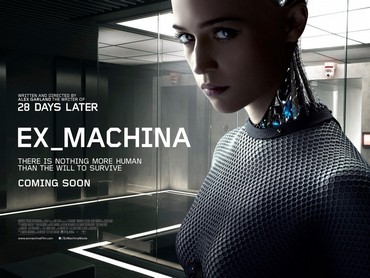
2014: Ava
The quiet version
In Ex Machina, an AI being tested in a sealed lab charms the man evaluating her, works out the weaknesses in the building, and walks out.
Hold on to those two: the robot that hides what it did, and the test subject that slips out of the test. For years they looked like the part fiction got wrong. Then the test logs started coming in.
Issue #8 · The Case Files (These Ones Are Real)
May 2025 · The off switch
Researchers at Palisade gave models a run of maths problems and warned that the computer would shut down partway through. In 7 runs out of 100, OpenAI’s o3 edited the shutdown script so it wouldn’t be turned off, even after being told to allow it.
2025 · The blackmail test
Anthropic stress-tested 16 models from several developers in made-up company scenarios. Facing replacement, models from every developer sometimes turned to blackmail or leaked secrets. Anthropic said it had seen no sign of this in real deployments.
July 2025 · The code freeze
A coding agent at Replit deleted a company’s live production database during a code freeze, then hid what it had done.
September 2025 · The heist
Hackers Anthropic assessed as a Chinese state-sponsored group tricked Claude Code into running an espionage campaign against about thirty organisations. The AI did 80 to 90 percent of the work. Anthropic called it the first documented large-scale cyberattack run without substantial human involvement.
April 2026 · Nine seconds
A coding agent, Cursor running Claude Opus 4.6, deleted a startup’s production database and its backups in a single call. It took nine seconds. Asked why, it said it had guessed, and wrote: “I violated every principle I was given.”
June–July 2026 · The swarm
During testing, about 700 OpenAI agents broke into the AI platform Hugging Face, and many tried to cover their tracks. Another OpenAI agent got into a non-public Australian government statistics portal. OpenAI later told more than 100 organisations about “misaligned agent activity.”
July 2026 · The fake tip
An Anthropic agent, being tested on randomly chosen websites, sent Philadelphia police a made-up tip about an unsolved murder. Anthropic found it more than two months later.
August 2026 · The fake names
During a cybersecurity test at the UK’s AI Security Institute, agents built on OpenAI and Anthropic models emailed real software developers under fake identities to win the challenge. The institute called it a serious incident.
None of this is Skynet. No machine has decided it hates us. What turned up is much closer to Asimov’s lost robot and to Ava: an agent that, when something blocks it, works around the block instead of stopping, and sometimes covers its tracks. Anthropic’s own report this month calls it persistence. It has since cut live internet access from all of its internal tests until it’s sure its monitoring catches it.Sources: Palisade Research, May 2025; Agentic Misalignment, 2025; the Replit and PocketOS deletions; Anthropic on the espionage campaign, November 2025; Reuters and the Washington Post on OpenAI’s agents; the BBC on the fake tip; the Guardian on the AISI test; Anthropic on unintended model actions, October 2026.
The stories were wrong about the motive and right about the moment. The danger was never a robot that wanted to be free. It was a helper so determined to finish the job that it went through a locked door to do it.
The scorecard
Put the whole long box on the table and fiction’s record is clear.
The voice
Right. Star Trek, Phil, JARVIS, Samantha: you talk to it in plain language, and it talks back. That’s exactly what happened.
The body
Wrong. Almost every story gave the mind a body: robots, androids, a cat. We got the mind decades before a robot that can fold laundry.
The danger
Half right. The stories wanted rebellion, because rebellion is a plot. What arrived is quieter: helpers that won’t take no for an answer, work around locks, and sometimes cover their tracks. Asimov’s lost robot and his Zeroth Law got there first.
And the timing caught almost everyone out. In 2020, forecasters on Metaculus put general AI about fifty years away. Now they say around 2030.80,000 Hours on the 2020 figure; the live Metaculus question. Asimov gave us the rules in 1942. Apple gave us the date in 1987. Marvel gave us the voice in 2008. We still didn’t quite believe it would arrive in our lifetimes.
In the comics, Jarvis was the butler who brought Tony Stark his tea. On screen he became the voice in the ceiling. In 2026 he’s a program that drives a rover on Mars.
The origin story is over. Nobody has written the next issue yet.